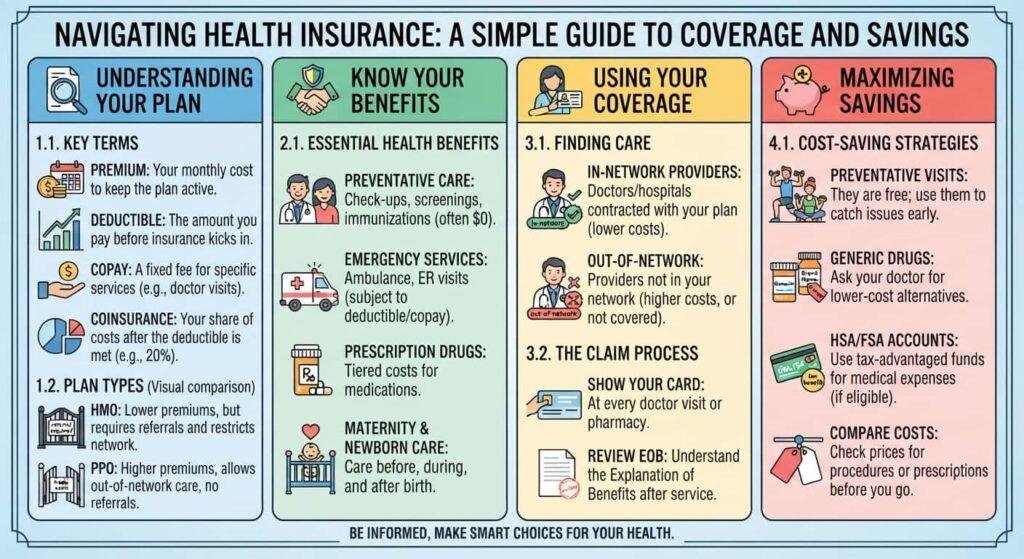

Learn how health insurance works with our easy guide. Discover tips on medical coverage, policy benefits, and finding the right health plan for you.
Finding the right health insurance medical coverage can feel very confusing. When you look at bills from the doctor, your head might spin. Having a good safety net changes everything. A proper health plan protects your wallet from surprise medical bills. Think of it as a special shield for your body and your bank account. Without it, a single trip to the hospital could cost a huge amount of money. Many families skip coverage because terms sound too complex. Let us break down how medical protection works in plain and simple English. By the end, you will feel ready to pick a policy that fits your daily life.
What Is Health Insurance and Why Do You Need It?
A health insurance agreement is a contract between you and an insurance company. You pay a small monthly fee, called a premium. In return, the company helps pay for your doctor visits and medicine. Imagine you break your arm while playing soccer. A hospital visit can cost thousands of dollars out of pocket. If you have valid coverage, the insurance company pays a large part of that bill. This system keeps you safe from sudden financial ruin. Everyone needs a safety net because unexpected sickness can strike at any time.
How Monthly Premiums and Deductibles Work Together
Understanding your costs requires looking at two main parts. The premium is the price you pay each month just to keep your plan active. Your deductible is the money you must spend first before coverage kicks in. Suppose your deductible is five hundred dollars. You must pay that exact amount for your care before your insurance starts chipping in. Once you cross that line, sharing costs becomes much easier. Low premium plans often feature high deductibles. High premium plans usually feature low deductibles. Finding the right balance depends entirely on how often you visit doctors.
Copays and Coinsurance Explained Simply
Doctor visits come with small fees known as copays. A copay is a flat rate you pay right at the front desk. For example, a routine checkup might require a twenty-dollar copay. Coinsurance works a bit differently and uses percentages instead. If your coinsurance is twenty percent, you pay that fraction of the total bill. The insurance company covers the remaining eighty percent of the cost. These small payments add up, but they prevent massive bills all at once. Knowing these terms helps you budget your medical expenses each month.
Exploring Different Types of Medical Networks
Insurance companies build networks of approved doctors and hospitals. Going to a doctor inside your network saves you a lot of money. Networks usually fall into categories like HMO or PPO plans. An HMO requires you to see doctors within a strict local list. A PPO gives you more freedom to see specialists without a referral. Choosing the right network depends on your favorite family doctor. Always check if your preferred clinic takes your plan before signing up. This step avoids annoying surprise fees later on.
Why Preventive Care Matters for Your Health
Staying healthy is always better than treating a severe illness. Most modern plans cover preventive care services at zero extra cost. This includes yearly checkups, routine shots, and basic wellness tests. Catching a small health issue early stops it from becoming a big problem. Your insurance company wants you to stay well because it saves them money too. Take full advantage of these free preventive visits every single year. Your future self will thank you for making wellness a top priority.
How to Choose the Right Plan for Your Family
Picking the best policy requires looking closely at your family needs. Do you have kids who need regular dental checkups? Do you take daily prescription medicine that requires steady refills? Write down all your regular medical needs on a simple sheet of paper. Compare the total yearly cost, not just the monthly fee. Add your monthly payments together with your expected deductible costs. This math reveals the true value of every policy on your table. Pick the option that offers peace of mind without breaking your budget.
Managing Prescription Drug Costs and Formularies
Medicines can get very expensive without proper financial assistance. Every insurance plan uses a formulary, which is a list of covered drugs. Drugs are usually split into tiers based on their price and type. Generic medications sit in lower tiers and cost very little money. Brand name drugs sit in higher tiers and cost much more. Always check the drug list before picking a new medical policy. Ensuring your daily pills are covered prevents shocking pharmacy bills later on. Talk to your pharmacist if you ever need help finding cheaper alternatives.
Understanding Out of Pocket Maximums
An out of pocket maximum is your ultimate financial shield. It represents the absolute highest amount you will pay in a single year. Once your spending hits this limit, the insurance company pays one hundred percent. Suppose your maximum limit is three thousand dollars. After you spend that much on deductibles and coinsurance, your care becomes entirely free. This rule protects patients who face serious long-term illnesses or major surgeries. Knowing your limit brings deep comfort during stressful medical emergencies.
What Happens If You Change Jobs or Move?
Life changes fast, and your coverage might need to shift too. Changing jobs often means entering a brand-new corporate medical pool. Moving to a different state can also change your available insurance options. Most major life events trigger a special enrollment period. This window lets you switch plans outside of the normal yearly timeline. Always report major life updates to your provider immediately. Staying proactive keeps your medical protection active without any risky gaps.
Common Mistakes to Avoid When Buying Coverage
Many people rush through paperwork and make costly errors. One common mistake is picking a plan based only on the monthly price. A cheap monthly rate often hides a massive deductible fee. Another mistake is forgetting to check if your favorite doctor is approved. Always read the fine print before signing any binding agreements. Taking your time prevents frustration and ensures you get proper medical support. When in doubt, ask an expert to walk you through the tricky paperwork.
| Feature | Basic Plan | Premium Plan |
| Monthly Premium | Low | High |
| Deductible Amount | High | Low |
| Doctor Visits | Higher Copay | Lower Copay |
| Best For | Healthy Individuals | Frequent Medical Care |
Frequently Asked Questions
What is the main purpose of health insurance?
It acts as a financial safety net that helps pay for doctor visits, hospital stays, and medicines, protecting you from extreme medical debt.
How do monthly premiums differ from deductibles?
A premium is the fixed amount you pay every month to keep your plan active. A deductible is the money you pay out of pocket before your insurance starts paying.
Are routine checkups free under most plans?
Yes, most standard plans cover preventive services like yearly checkups and basic immunizations at no extra cost to you.
What is an out-of-pocket maximum?
It is the highest total amount you will pay for covered services in a single year. Once reached, the insurance covers one hundred percent of costs.
Can I choose any doctor I want?
It depends on your network type. HMO plans require local in-network doctors, while PPO plans offer more freedom to see outside specialists.
What should I look for when picking a plan?
Look at your total yearly costs, including monthly fees, deductibles, prescription drug coverage, and whether your preferred doctors accept the plan.

