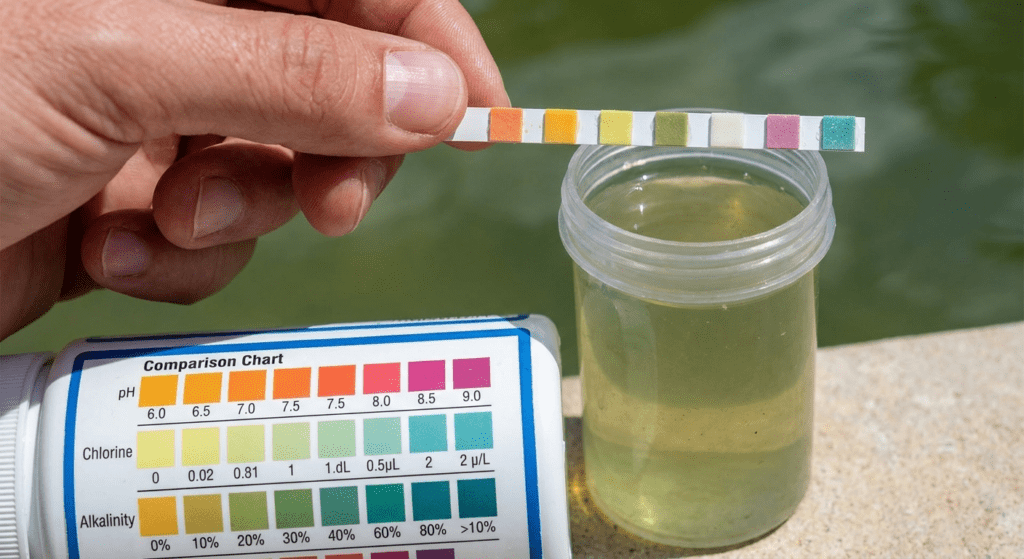

Cloudy pool water is a frequent problem for pool owners. It turns clear water into a hazy, uninviting mess.
The causes range from poor filtration to chemical imbalances, but most issues are fixable within a few days.
Understanding why the water turns cloudy and following a structured approach will restore clarity and safety.
Common Reasons for Cloudy Pool Water
Cloudy water usually results from one of four main problems: inadequate filtration, unbalanced water chemistry, low chlorine levels, or external contaminants. Each cause requires a specific treatment.
Poor Filtration and Circulation
The filtration system is responsible for removing tiny particles from the water.
If the pump or filter is not working properly, particles remain suspended.
Common filtration issues include a dirty or clogged filter, a full skimmer basket, a worn-out filter medium, or insufficient pump runtime.
Pool water should pass through the filter at least once every 24 hours.
Running the pump for 8 to 12 hours per day is typical.
Return jets should be angled downward and uniformly positioned to create good circulation.
Chemical Imbalances
High pH, high total alkalinity, and high calcium hardness are frequent causes of cloudy water.
When pH rises above 7.8, dissolved calcium can precipitate into fine white particles, creating a milky appearance.
High alkalinity (above 120 ppm) can also cause calcium scaling.
Conversely, low pH makes chlorine overly reactive and quickly depleted.
Balanced water chemistry is essential for both clarity and sanitizer effectiveness.
Low Chlorine Levels
Free chlorine is the primary sanitizer.
When its level drops below 1 ppm, bacteria, algae, and other microorganisms can multiply, turning the water cloudy or greenish.
Combined chlorine (chloramines) from insufficient free chlorine also causes cloudiness and a strong chlorine smell. Shocking the pool restores free chlorine and removes chloramines.
Contaminants and Algae
Debris such as leaves, pollen, dirt, and sunscreen can overload the pool. Algae growth is another common culprit. Even early-stage algae that is not yet visible can cause cloudiness. Heavy rain or strong winds introduce organic matter and dilute chemicals, making the problem worse.
Step-by-Step Process to Clear Cloudy Pool Water
Follow these steps in order. Most pools will clear within 48 to 72 hours.
Step 1: Test and Balance Water Chemistry
Begin with a reliable pool test kit. Test pH, total alkalinity, free chlorine, and calcium hardness.
The ideal ranges are:pH: 7.4 to 7.6Total alkalinity: 80 to 120 ppmFree chlorine: 1 to 3 ppmCalcium hardness: 200 to 400 ppmIf alkalinity is too high, lower it with muriatic acid first. Then adjust pH. Low chlorine requires shocking.
If calcium hardness is above 400 ppm, the only effective solution is partial drainage and refilling with softer water.
Step 2: Inspect and Clean the Filtration System
Check the pump for proper operation. Clean the filter according to its type.
For sand filters, backwash until the sight glass is clear.
For cartridge filters, remove and rinse with a hose, or soak in a filter cleaner if heavily soiled. Empty the skimmer basket and pump strainer basket.
Ensure the filter pressure gauge is in the normal range.
If the filter media is older than five years (sand) or two to three years (cartridge), consider replacement.
Step 3: Shock the Pool
Use a calcium hypochlorite shock or a non-chlorine shock. Follow the product dosage instructions based on pool volume.
For a standard cloudy pool, use one pound of cal-hypo per 10,000 gallons.
Add the shock in the evening to avoid sunlight degrading it. Pour it evenly around the pool edges. Run the filter continuously overnight.
Step 4: Remove Debris and Vacuum
Skim the surface to remove floating debris. Brush the pool walls and floor to dislodge any algae or deposits. Vacuum the pool thoroughly, either manually or with an automatic cleaner. If the water is heavily contaminated, vacuum to waste (bypassing the filter) to avoid clogging.
Step 5: Use a Clarifier or Flocculant
If the water remains cloudy after shocking and filtration, a clarifier can help.
Clarifiers bind microscopic particles into larger clumps that the filter can capture.
Add the clarifier according to the label instructions and run the filter for 24 hours.
For stubborn cloudiness, a flocculant may be an option, but it works best with sand filters only and requires manual vacuuming after the particles settle. Always backwash the filter after using a clarifier.
Preventing Cloudy Pool Water
Regular maintenance is the key to prevention. Test water chemistry at least once per week.
Maintain proper chemical levels and shock the pool weekly during heavy use.
Run the pump long enough each day to circulate all the water. Clean the filter regularly and replace media as needed.
Skim and vacuum the pool at least once a week.
After heavy rain or pool parties, test and adjust chemicals promptly.
If cloudy water persists despite following all steps, it may be a sign of underlying equipment failure or a subtle chemical imbalance that requires professional analysis.
A thorough review of your filtration system and water chemistry history will help identify recurring patterns.
A pool water cloudy problem can also happen when fine debris, algae, or unbalanced chemicals remain in the water after vacuuming.
Is It Safe to Swim in Cloudy Water?
No. Cloudy water can hide bacteria, algae, and chemical irritants.
It may also obscure the pool bottom, creating a drowning risk.
Do not swim if you cannot clearly see the lowest step or the main drain.
Wait until the water clears and all chemical levels are within safe ranges.
Summary
Cloudy pool water is caused by poor filtration, chemical imbalances, low chlorine, or contaminants.
The most effective treatment includes testing and balancing chemicals, cleaning the filter, shocking the pool, removing debris, and using a clarifier if needed.
With consistent maintenance, you can keep the water clear and safe all season long.